Beijing
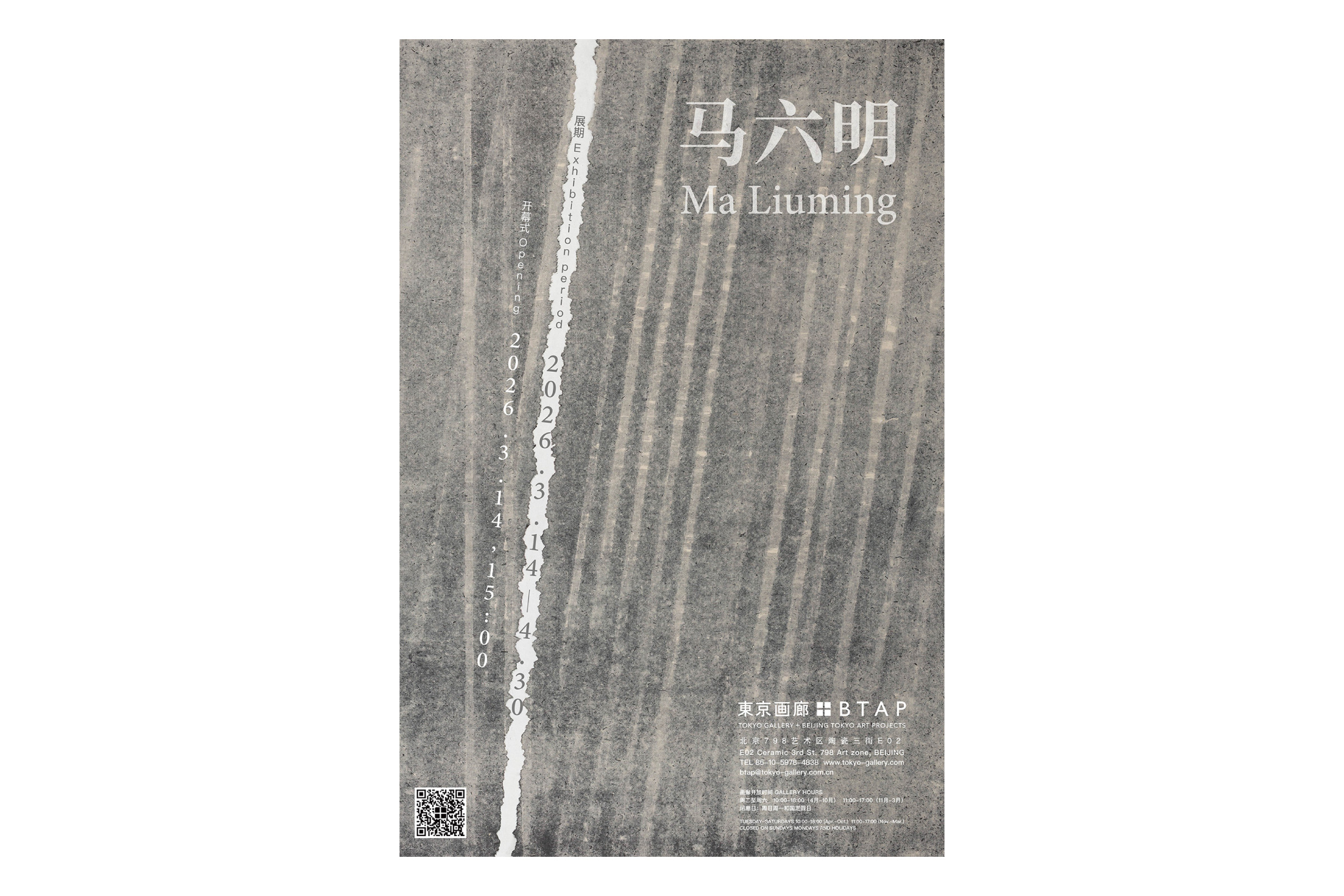
Ma Liuming
2026/3/14–4/30
Tokyo Gallery + BTAP is delighted to announce a solo exhibition by Ma Liuming, on view from March 13 to April 30, 2026.
This exhibition presents a new body of work centered on the artist’s recent explorations, which adopts the “ink permeation” technique. Through Ma Liuming’s profound deconstruction of ink as a medium and his return to materiality, the exhibition initiates an in-depth dialogue on the essence of tradition, the language of materials, and their contemporary transformation. Internationally recognized for his groundbreaking performance, Ma Liuming first gained prominence through works marked by powerful bodily narratives that challenged artistic conventions. Alongside his gender performances, Ma has long pursued the practice of oil painting, whose approach to “leaving blank spaces” evolved into the “ink permeation” technique in ink painting. Rather than a rupture, this shift—from direct corporeal expression and provocative bodily language toward contemplative works on paper—represents a continuation and deepening of the artist’s evolving life practice.
The exhibition features more than ten recent ink paintings rendered with the distinctive reverse-application technique. Ma pours ink of varying densities onto the back side of hemp paper, allowing it to slowly permeate through the fibers and diffuse naturally. This process simultaneously responds to the traditional calligraphic ideal of “force penetrating through the paper” while engaging a philosophical inquiry into the relationship between control and chance. The movement of ink across the backside of the paper is no longer fully commanded by the artist’s hand; instead, it interacts with the texture of the paper and the atmospheric humidity, ultimately producing irreproducible visual surfaces on the front.
The natural hemp paper Ma Liuming uses for his paintings is coarse in texture, formed by its pronounced fibrous structure. During the permeation process, ink does not spread evenly but forms granular and mottled variations as it encounters resistance within the fibers. This visual language departs from traditional ink painting’s pursuit of fluidity and luminosity, instead embracing a primal force and raw aesthetic. The imagery within these works encompasses the artist’s iconic performative alter ego alongside birds, rain, trees, fireworks, and other living presences. Rather than being delineated distinctively, these forms emerge through diffusion and permeability, oscillating between figuration and abstraction. The images generate an atmosphere both monumental and solemn, while quietly retaining the sophistication, a vital characteristic of Song dynasty painting. Through these motifs, Ma Liuming reflects on the fragility and resilience of individual life within the grand scheme of temporal and spatial dimensions.
In traditional ink painting, empty space (liubai) in the painted image is typically understood as an aesthetic strategy balancing presence and absence. In Ma’s work, however, such a strategy assumes a renewed narrative function. Several works in the exhibition bear traces of tearing and re-assemblage, where completed paintings are deliberately ripped apart, leaving measured blank space. These spaces no longer function as passive backgrounds but as powerful narrative elements. They may evoke the fading embers from dimming fireworks or the trajectory of missiles across a battlefield sky, pointing toward themes of loss and displacement. This violent reconfiguration of liubai diverges from the harmonious ideal of unity between humanity and nature traditionally associated with ink painting, instead revealing nature’s dual capacity for destruction and containment. Before such forces, human life appears both fragile and resilient, embodying a persistent will to endure.
In an era in which algorithms attempt to encode all perception, Ma Liuming’s ink painting practice offers a rare form of resistance. His process privileges intuition and contingency: the diffusion of ink and the breathing of paper remain traces of life that cannot be replicated by data. Such a respect for unpredictability constitutes a profound inquiry into the dominance of contemporary technological rationality.